

Hydrocarbon Gas Detectors
Hydrocarbon gases are organic compounds made up of hydrogen and carbon atoms. Common examples include methane, propane, butane, and other flammable gases used in fuel systems, oil & gas operations, chemical processing, and industrial heating.
The primary danger of hydrocarbon gases is flammability and explosion risk. When mixed with air at certain concentrations, these gases can ignite from a spark. In the UK, exposure limits and safety guidance focus heavily on explosive risk, measured as a percentage of the Lower Explosive Limit (LEL). The LEL is the lowest concentration at which a gas can ignite. For example, methane has an LEL of approximately 5% volume in air. Gas detection systems are typically set to alarm at 10% LEL (early warning) and 20% LEL (high alarm) to allow evacuation or corrective action before explosive conditions are reached.
For more information, please call 02920 759 683 or complete the form here.
Hydrocarbon Gas Detectors
Hydrocarbon gases are organic compounds made up of hydrogen and carbon atoms. Common examples include methane, propane, butane, and other flammable gases used in fuel systems, oil & gas operations, chemical processing, and industrial heating.
The primary danger of hydrocarbon gases is flammability and explosion risk. When mixed with air at certain concentrations, these gases can ignite from a spark. In the UK, exposure limits and safety guidance focus heavily on explosive risk, measured as a percentage of the Lower Explosive Limit (LEL). The LEL is the lowest concentration at which a gas can ignite. For example, methane has an LEL of approximately 5% volume in air. Gas detection systems are typically set to alarm at 10% LEL (early warning) and 20% LEL (high alarm) to allow evacuation or corrective action before explosive conditions are reached.
For more information, please call 02920 759 683 or complete the form here.
SKU: GD10-P00-23AN-0XH-00

Teledyne GD10 Series – Infrared Gas Detector
- Gas Detection Class Fixed
- ATEX ATEX
- Output 4 to 20 mA, HART
- Power Consumption 24 VDC
- Cable Entry M20 Ex e cable gland
- Brand Teledyne
View product- NEW
SKU: CPX-BSSD4SBACDXX-Y
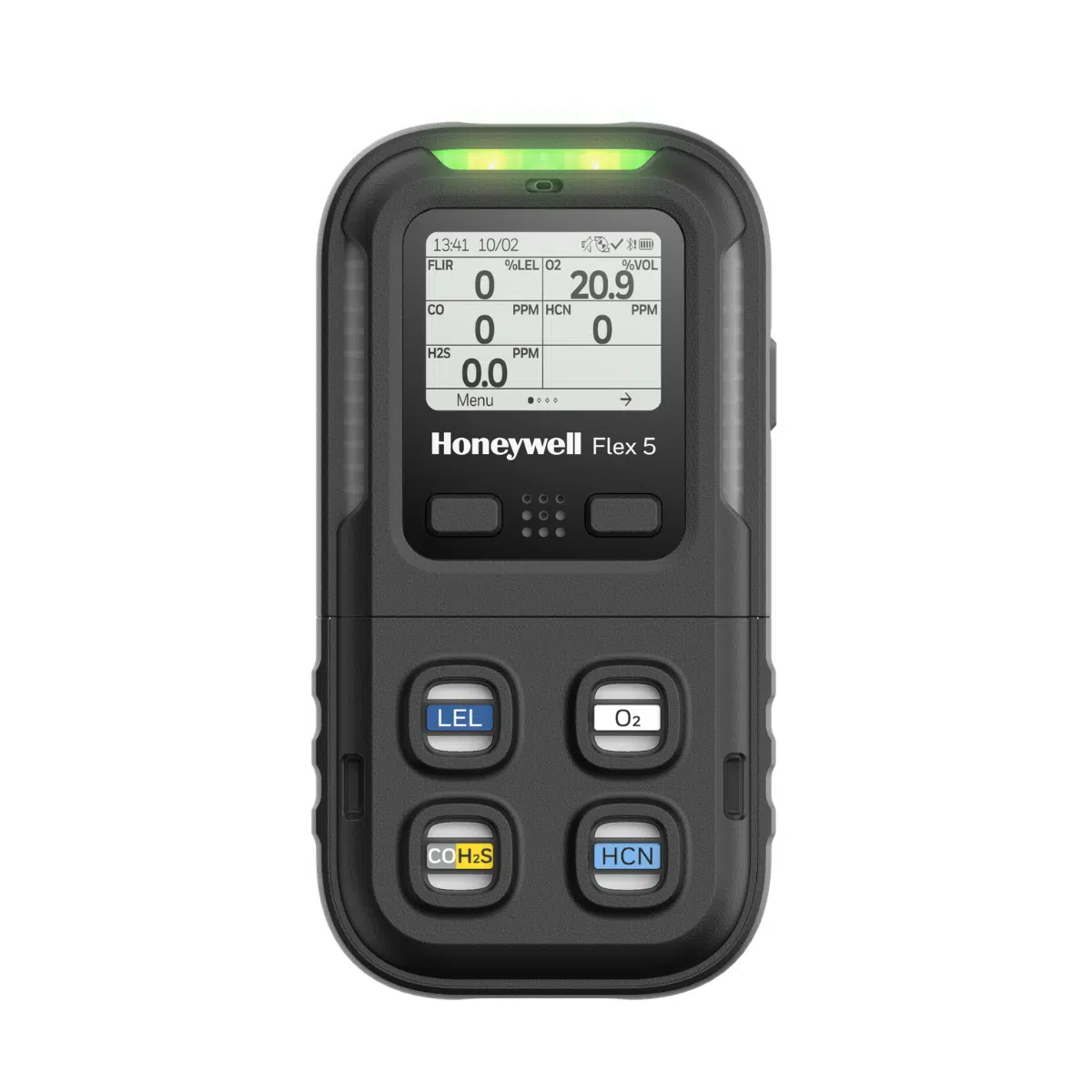
Honeywell Flex 5 Multi-Gas Detector
- Gas Detection Class Multi Gas, Portable
- ATEX ATEX
- Response Time Varied
- Brand BW Technologies, Honeywell
- Part Numbers CPX-BSSD4SBACDXX-Y - Honeywell Flex 5 Multi Gas Detector Diffused 4-Way Cartridge - LEL, O2, CO, H2S, CPX-BSSP6SBACDFV-Y - Honeywell Flex 5 Multi Gas Detector Pumped 6-Way Cartridge - LEL, O2, CO, H2S, SO2, PID, CPX-BSSD6SBACDFV-Y - Honeywell Flex 5 Multi Gas Detector Diffused 6-Way Cartridge - LEL, O2, CO, H2S, SO2, PID
View product


FAQs
Hydrocarbon gases are organic compounds made of hydrogen and carbon atoms. Common examples include methane, propane, butane, and other flammable gases used in industrial and energy applications.
The main risk is flammability. When hydrocarbon gases mix with air at certain concentrations, they can ignite, causing fires or explosions.