

Refrigerant Gas Detectors
Refrigerant gases are chemical compounds used in cooling and air conditioning systems to transfer heat from one place to another. They act as the working fluid inside equipment such as domestic refrigerators, commercial cold storage units, heat pumps and large HVAC systems. Their primary purpose is to absorb heat from one environment and release it elsewhere, making controlled cooling possible.
Refrigerants operate within a closed system through what is known as the vapour-compression refrigeration cycle. In this cycle, the refrigerant absorbs heat and evaporates from a liquid into a gas. The gas is then compressed, which increases its pressure and temperature. As it flows through the condenser, it releases the absorbed heat and turns back into a liquid. The liquid then passes through an expansion device, where its pressure drops rapidly, cooling it down before it re-enters the evaporator to repeat the process. This continuous cycle allows fridges to keep food cold, air conditioning systems to cool buildings, and heat pumps to provide temperature control.
For more information, please call our expert 02920 759 683 or visit our contact page.
Refrigerant Gas Detectors
Refrigerant gases are chemical compounds used in cooling and air conditioning systems to transfer heat from one place to another. They act as the working fluid inside equipment such as domestic refrigerators, commercial cold storage units, heat pumps and large HVAC systems. Their primary purpose is to absorb heat from one environment and release it elsewhere, making controlled cooling possible.
Refrigerants operate within a closed system through what is known as the vapour-compression refrigeration cycle. In this cycle, the refrigerant absorbs heat and evaporates from a liquid into a gas. The gas is then compressed, which increases its pressure and temperature. As it flows through the condenser, it releases the absorbed heat and turns back into a liquid. The liquid then passes through an expansion device, where its pressure drops rapidly, cooling it down before it re-enters the evaporator to repeat the process. This continuous cycle allows fridges to keep food cold, air conditioning systems to cool buildings, and heat pumps to provide temperature control.
For more information, please call our expert 02920 759 683 or visit our contact page.
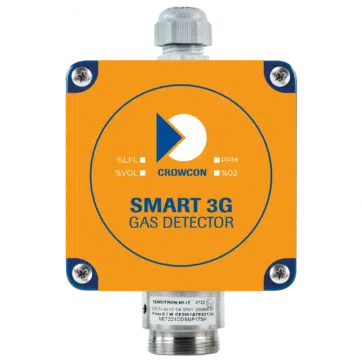
SKU: SMART 3G-C3

Crowcon SMART 3G-C3 Fixed Gas Detector
- Gas Detection Class Fixed
- ATEX ATEX
- Temperature -40 / +60°C
- Output 4-20 mA, 1 or 3 relay boards, RS485
- Brand Crowcon
- Part Numbers Crowcon Smart 3G-C3 - R454b, Infared, 0-100% LEL, Crowcon Smart 3G-C4 - R404a, Infrared, 0-2000 ppm, Crowcon SMART 3G-C3 - Flammable gas, Infrared sensor, LPG 0-100% LEL, Crowcon Smart 3G-C3 - R454c, Infrared, 0-100% LEL, Crowcon Smart 3G-C4 - R407a, Infrared, 0-2000 ppm, Crowcon SMART 3G-C3 - Toxic gas, electrochemical sensor, Oxygen 0-25% Vol, Crowcon Smart 3G-C3 - R32, Infrared, 0-100% LEL, Crowcon SMART 3G-C3 - Flammable gas, catalytic sensor, Methane 0-100% LEL, Crowcon Smart 3G-C4 - R407f, Infrared, 0-2000 ppm, Crowcon SMART 3G-C3 - Toxic gas, electrochemical sensor, CO 0-500ppm, Crowcon Smart 3G-C3 - R1234yf, Infrared, 0-100% LEL, Crowcon SMART 3G-C3 - Flammable gas, catalytic sensor, LPG 0-100% LEL, Crowcon Smart 3G-C4 - R449, Infrared, 0-2000 ppm, Crowcon SMART 3G-C3 - Toxic gas, electrochemical sensor, Ethylene 0-200ppm, Crowcon Smart 3G-C3 - R1234ze, Infrared, 0-100% LEL, Crowcon SMART 3G-C3 - Flammable gas, catalytic sensor, Propane 0-100% LEL, Crowcon Smart 3G-C5 - R507a, Infrared, 0-2000 ppm, Crowcon SMART 3G-C3 - Toxic gas, electrochemical sensor, Ammonia 0-100ppm, Crowcon Smart 3G-C3 - R32, Infrared, 0-2000 ppm, Crowcon SMART 3G-C3 - Flammable gas, catalytic sensor, Butane 0-100% LEL, Crowcon Smart 3G-C4 - R410a, Infrared, 0-2000 ppm, Crowcon SMART 3G-C3 - Toxic gas, electrochemical sensor, H2S 0-50ppm, Crowcon Smart 3G-C1 - R134a, Infrared, 0-2000 ppm, Crowcon SMART 3G-C3 - Flammable gas, catalytic sensor, Petrol Vapours 0-100% LEL, Crowcon Smart 3G-C4 - R417a, Infrared, 0-2000 ppm, Crowcon SMART 3G-C3 - Toxic gas, electrochemical sensor, Nitric Oxide 0-100ppm, Crowcon Smart 3G-C6 - SF6, Infrared, 0-2000 ppm, Crowcon SMART 3G-C3 - Flammable gas, catalytic sensor, Hydrogen 0-100% LEL, Crowcon Smart 3G-C4 - R448, Infrared, 0-2000 ppm, Crowcon SMART 3G-C3 - Toxic gas, electrochemical sensor, Hydrogen 0-2000ppm, Crowcon Smart 3G-C1 - R125, Infrared, 0-2000 ppm, Crowcon SMART 3G-C3 - Flammable gas, Infrared sensor, Methane 0-100% LEL, Crowcon SMART 3G-C3 - Toxic gas, electrochemical sensor, Hydrogen 0-3000ppm, Crowcon Smart 3G-C1 - R1234yf, Infrared, 0-2000 ppm, Crowcon SMART 3G-C3 - Flammable gas, Infrared sensor, Propane 0-100% LEL, Crowcon Smart 3G-C1 - R1234ze, Infrared, 0-2000 ppm, Crowcon SMART 3G-C3 - Flammable gas, Infrared sensor, Butane 0-100% LEL
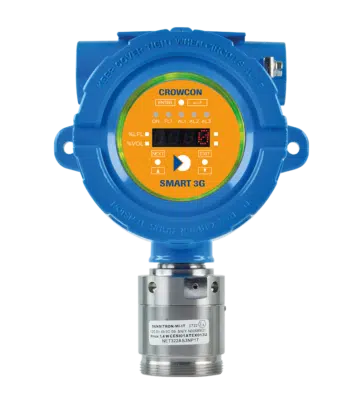
View productSKU: SMART 3G-D2
Crowcon SMART 3G-D2 Fixed Gas Detector
- Gas Detection Class Fixed
- ATEX ATEX
- Temperature -40 / +60°C
- Gas Type Hydrogen Sulfide - H2S, Ethylene oxide - ETO, R32, Ethyl Acetate, R448, R404A, Acetylene - C2H2, Cyclohexane, R454B, Ammonia - NH3, SF6, Benzene - C6H6, Ethylene, R152A, Butane - C4H10, Butadiene, R407A, Carbon Monoxide - CO, Acetic Acid, R407F, Ethane - C2H6, R1234YF, R449A, Ethanol - C2H6O, Cyclopentane, R1234ZE, R507A, Heptane - C7H16, Dimethyl Ether, R125, R410A, Hydrogen - H, Ethyl Ether, R134A, R417A
- Output 4-20 mA, 1 or 3 relay boards, RS485
- Brand Crowcon
- Part Numbers SMART 3G-D2, Flammable Cat Sensor, Methane 0-100% LEL, SMART 3G-D2, Flammable Cat Sensor, LPG 0-100% LEL, SMART 3G-D2, Flammable Cat Sensor, Butane 0-100% LEL, SMART 3G-D2, Flammable Cat Sensor, Propane 0-100% LEL, SMART 3G-D2, Flammable Cat Sensor, Petrol Vapours 0-100% LEL, SMART 3G-D2, Flammable Cat Sensor, Acetone 0-100% LEL, SMART 3G-D2, Flammable Cat Sensor, Hydrogen 0-100% LEL
View product- BEST SELLER
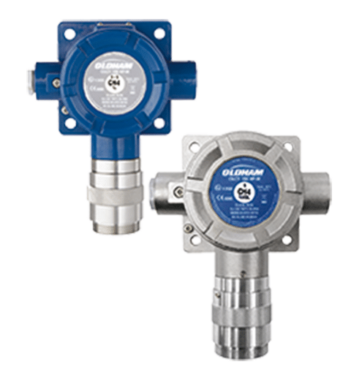
SKU: OLCT100
Teledyne OLCT 100 – OLC 100 Fixed Gas Detector
- Gas Detection Class Fixed
- ATEX ATEX
- Output 4 to 20 mA
- Power Consumption Depends on Detector Type
- Brand Teledyne
- Part Numbers OLCT100-XP-200 - lameproof transmitter on board XP sensor O2 0-30% Vol. 2 year sensor (Electrochemical versions), OLCT100-XP-002 - lameproof transmitter onboard XP sensor CH4, Methane 100% LEL (4,4 % Vol.) (Catalytic versions), OLCT100-XP-203 - lameproof transmitter onboard XP sensor CO, Carbon monoxide 0-100 ppm (Catalytic versions), OLCT100-XP-003 - lameproof transmitter onboard XP sensor H2, Hydrogen 100% LEL (Catalytic versions), OLCT100-XP-006 - lameproof transmitter - with catalitic sensor on board XP sensor NH3 100% LEL (Catalytic versions)
- Gas Type Xylene, Hydrogen Chloride - HCl, R407F, R11, Hydrogen Sulfide - H2S, R449A, R12, Nitrogen Dioxide - NO2, R410A, Silane - SiH4, R22, Nitric Oxide - NO, Hydrogen Cyanide - HCN, Arsine - AsH3, R23, Oxygen - O2, Methyl Chloride - CH3Cl, Ammonia - NH3, Ethylene oxide - ETO, R123, Phosphine - PH3, R1234YF, Methylene Chloride - CH2Cl2, Carbon Dioxide - CO2, Natural Gas or H2, R143A, Sulfur Dioxide - SO2, R1234ZE, FX56, Carbon Monoxide - CO, R407C, Toluene - C7H8, R134A, Ethanol, Chlorine - Cl2, R408A, Phosgene - COCl2, R32, Isopropanol, Chlorine Dioxide - ClO2, R507, R404A, 2-butanone (MEK), Formaldehyde - CH2O, R1233ZD, SF6
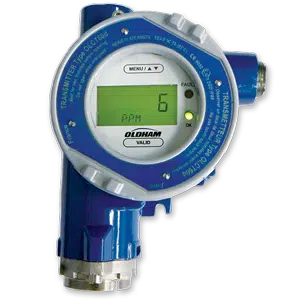
View product SKU: 14082
Teledyne OLCT 60 Fixed Gas Detector
- Gas Detection Class Fixed
- ATEX ATEX
- Temperature -20 to +55 (Explosive gases)
- Output 0-23 mA (4-20 mA reserved for measurement)
- Gas Type Xylene, Ammonia - NH3, Oxygen - O2, R32, R11, Carbon Dioxide - CO2, Ozone - O3, R404A, R12, Carbon Monoxide - CO, Explosive Gas (Ex), Phosphine - PH3, SF6, R22, Chlorine - Cl2, Infrared, Sulfur Dioxide - SO2, R407F, R23, Chlorine Dioxide - ClO2, Arsine - AsH3, Phosgene - COCl2, R449A, R123, Hydrogen - H, Ethylene oxide - ETO, R410A, R143A, Hydrogen Chloride - HCl, FX56, R408A, Hydrogen Cyanide, Toluene, Ethanol, R507, Hydrogen Fluoride - HF, R1234YF, Isopropanol, R1233ZD, Hydrogen Sulfide - H2S, R1234ZE, 2-butanone (MEK), Nitric Oxide - NO, R134A
- Brand Teledyne
View productSKU: H6401-0500
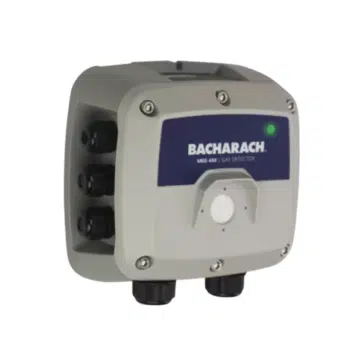
MSA Bacharach MGS-450 Gas Detector
- Gas Detection Class Fixed
- Temperature -40 to 122°F (-40 to +50°C)
- Brand MSA
View productSKU: H3015-5043
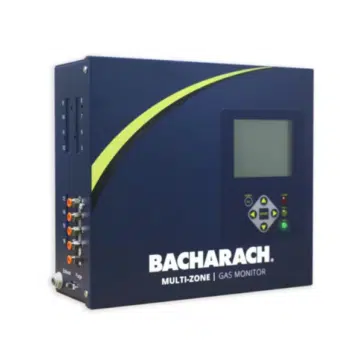
MSA Bacharach Multi-Zone Gas Monitor
- Gas Detection Class Fixed
- ATEX ATEX
- Temperature –40°C to 60°C (–40°F to 140°F)
- Brand MSA
View productSKU: 10254155
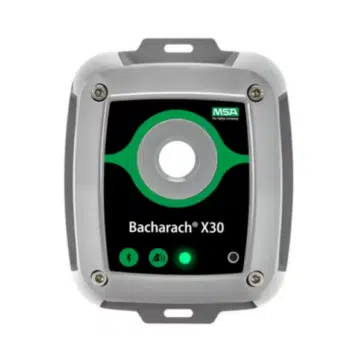
MSA Bacharach X30 Refrigerant Monitor
- Gas Detection Class Fixed
- Temperature -40 to 122°F (-40 to +50°C)
- Brand MSA
View productSKU: 10254035
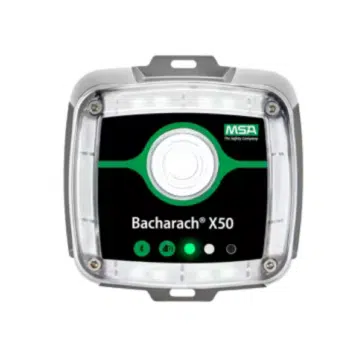
MSA Bacharach X50 Refrigerant Monitor
- Gas Detection Class Fixed
- Temperature -40 to 122°F (-40 to +50°C)
- Brand MSA
View product

FAQs
A refrigerant gas is a chemical compound used within cooling and air conditioning systems to absorb heat from one area and release it elsewhere. It circulates inside a sealed system and changes between liquid and gas states to enable temperature control.
Refrigerants work through the vapour-compression cycle. They absorb heat as they evaporate into a gas, are compressed to raise their temperature, release heat as they condense back into a liquid, and then expand to cool down before repeating the cycle.
Older systems used chlorofluorocarbons such as Dichlorodifluoromethane, which were phased out due to ozone damage. They were replaced by hydrochlorofluorocarbons like Chlorodifluoromethane. More recently, hydrofluorocarbons such as 1,1,1,2-Tetrafluoroethane became common, although these are now being phased down due to their high Global Warming Potential.