

Flame Detectors
Flame Detectors
SKU: 10225125

MSA FL5000 MSIR Flame Detector
- Gas Detection Class Fixed
- ATEX ATEX
- Temperature ATEX/IECEX/UKCA/CPR: -67°F to +176°F (-55°C to +80°C)
- Brand MSA
View productSKU: 16581-00
Talentum 16000 Flame Detector IR2
- Gas Detection Class Fixed
- Output Programmable operation including latching or non-latching
- ATEX Non ATEX
- Cable Entry 2 x 20 mm (2 x ¾")
- Temperature -10°C to +55°C (+14°F to +131°F)
- Brand FFE
View productSKU: 16511-00
Talentum 16000 Flame Detector IR2 (Ex d)
- Gas Detection Class Fixed
- Output Programmable operation including latching or non-latching
- ATEX ATEX
- Cable Entry 3 x 20 mm (3 x ¾")
- Temperature -10°C to +55°C (+14°F to +131°F)
- Brand FFE
View productSKU: 16589-00
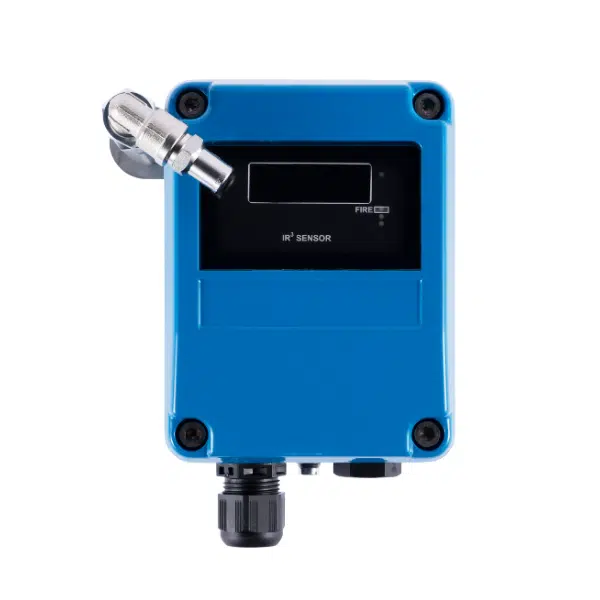
Talentum 16000 Flame Detector IR3
- Gas Detection Class Fixed
- Output Programmable operation including latching or non-latching
- ATEX Non ATEX
- Cable Entry 2 x 20 mm (2 x ¾")
- Temperature -10°C to +55°C (+14°F to +131°F)
- Brand FFE
View productSKU: 16519-00
Talentum 16000 Flame Detector IR3 (Ex d)
- Gas Detection Class Fixed
- Output Programmable operation including latching or non-latching
- ATEX ATEX
- Cable Entry 3 x 20 mm (3 x ¾")
- Temperature -10°C to +55°C (+14°F to +131°F)
- Brand FFE
View productSKU: 1800-101
Talentum 16000 Test Torch: Advanced Flame Detector
- Gas Detection Class Fixed
- Output Programmable operation including latching or non-latching
- ATEX Non ATEX
- Temperature -10°C to +55°C (+14°F to +131°F)
- Brand FFE
View productSKU: 16591-00
Talentum 16000 UV/IR2 Flame Detector
- Gas Detection Class Fixed
- Output Programmable operation including latching or non-latching
- ATEX Non ATEX
- Cable Entry 3 x 20 mm (3 x ¾")
- Temperature -10°C to +55°C (+14°F to +131°F)
- Brand FFE
View productSKU: 07127-00-1
Talentum 16000 Adjustable Mounting Bracket (IR2 Ex d, IR3 Ex d)
- Brand FFE
- Product Type Accessory
View productSKU: 07127-00
Talentum 16000 Adjustable Mounting Bracket (IR2, IR3, UV/IR)
- Brand FFE
- Product Type Accessory
View productSKU: 12556-00
Talentum 16000 Air Purge Adapter
- Brand FFE
- Product Type Accessory
View productSKU: 12555-00
Talentum 16000 Air Purge Adapter (Ex d)
- Brand FFE
- Product Type Accessory
View productSKU: 12545-00
Talentum 16000 Weather Shield
- Brand FFE
- Product Type Accessory
View productSKU: 07279-00
Talentum 16000 Weather Shield (Ex d)
- Brand FFE
- Product Type Accessory
View product




FAQs
A flame detector is a device that identifies a fire by sensing its infrared (IR), ultraviolet (UV), or visible light emissions.
Flame detectors use sensors to detect the specific light patterns produced by a flame. UV detectors sense ultraviolet radiation, IR detectors sense infrared radiation, and combination UV/IR detectors monitor both for greater accuracy.
UV (Ultraviolet) detects UV radiation from flames. IR (Infrared) detects heat/infrared emissions. UV/IR combination reduces false alarms and increases detection reliability. IR3 or triple IR uses three IR wavelengths for more precise detection.
Flame detectors should be installed where fires are most likely to start or spread, such as chemical storage areas, refineries, power plants, or high-risk industrial zones. Placement depends on coverage area, line of sight, and environmental conditions.
Performance can be influenced by the distance to the flame, ambient light conditions, environmental factors (dust, fog, rain), and presence of reflective surfaces. Although some flame detectors are not impacted by environmental factors.
False alarms can occur due to sunlight reflections, welding arcs, or hot surfaces. False positives can be reduced by using combination UV/IR or triple IR detectors.
Flame detectors should be inspected, tested, and maintained regularly according to manufacturer recommendations and UK safety standards. Get in contact with Rockall Safety for more information.