

Oxygen Gas Detectors
Oxygen (O₂) is a colourless, odourless, and tasteless gas that makes up approximately 20.9% of the Earth’s atmosphere. Oxygen is also widely used in manufacturing, medical applications, metal cutting and welding, water treatment, and chemical processing.
Oxygen is naturally found in the air we breathe. Levels can become hazardous when they fall below or rise above normal atmospheric concentrations.
Rockall Safety supplies a range of gas detectors capable of monitoring oxygen levels. Devices such as the Blackline Safety G8 provide real time multi-gas monitoring and the BW Clip 2 is a reliable single gas detector that can be configured to monitor oxygen.
For more information about our oxygen gas detectors, or to discuss your site requirements, contact Rockall Safety today. Call us on 02920 759 683 or email [email protected] to speak with one of our experts.
Oxygen Gas Detectors
Oxygen (O₂) is a colourless, odourless, and tasteless gas that makes up approximately 20.9% of the Earth’s atmosphere. Oxygen is also widely used in manufacturing, medical applications, metal cutting and welding, water treatment, and chemical processing.
Oxygen is naturally found in the air we breathe. Levels can become hazardous when they fall below or rise above normal atmospheric concentrations.
Rockall Safety supplies a range of gas detectors capable of monitoring oxygen levels. Devices such as the Blackline Safety G8 provide real time multi-gas monitoring and the BW Clip 2 is a reliable single gas detector that can be configured to monitor oxygen.
For more information about our oxygen gas detectors, or to discuss your site requirements, contact Rockall Safety today. Call us on 02920 759 683 or email [email protected] to speak with one of our experts.
SKU: DCNZDGB-OAOA

Crowcon DUOIQ Dual Gas Detector
- Gas Detection Class Portable, Multi Gas
- ATEX PENDING
- Gas Type Butane - C4H10, Carbon Monoxide - CO, Sulphur Dioxide, Chlorine - Cl2, Hydrogen - H, Hydrogen Sulfide - H2S, Methane - CH4, Nitrogen Dioxide - NO2, Oxygen - O2, Ozone - O3, Ammonia - NH3
- Response Time <10s
- Battery Run Time Varied
- Data Logging Up to 500 Event Logs
- Brand Crowcon
View productSKU: HW-RIGRAT
Honeywell BW RigRat Area Monitor
- Gas Detection Class Area Monitors
- ATEX ATEX
- Gas Type Carbon Monoxide - CO, Chlorine - Cl2, Flammable - LEL, VOCs, Hydrogen Cyanide, Hydrogen Sulfide - H2S, Nitrogen Dioxide - NO2, Nitric Oxide - NO, Oxygen - O2, Sulfur Dioxide - SO2, Ammonia - NH3
- Brand Honeywell, BW Technologies
View productSKU: GDC-EXO-8
Blackline EXO 8 Area Monitor
- Gas Detection Class Area Monitors
- ATEX ATEX
- Temperature -20°C to 50°C (-4°F to 122°F)
- Display 4.4“ diagonal, 480 by 640 pixel, eight-colour active matrix liquid crystal display
- Gas Type Hydrogen Sulfide - H2S, Nitrogen Dioxide - NO2, Oxygen - O2, Sulfur Dioxide - SO2, Ammonia - NH3, VOCs, Carbon Dioxide - CO2, Carbon Monoxide - CO, Chlorine - Cl2, Chlorine Dioxide - ClO2, Infrared, Hydrogen Cyanide
- Brand Blackline Safety
View productSKU: G6-X-XXXX
Blackline G6 Single Gas Detector
- Gas Detection Class Single Gas, Portable
- ATEX ATEX
- Gas Type Carbon Monoxide - CO, Hydrogen Sulfide - H2S, Oxygen - O2, Sulfur Dioxide - SO2
- Battery Run Time Up to 1 year under normal usage
- Brand Blackline Safety
View productSKU: G7-MULTI-GAS
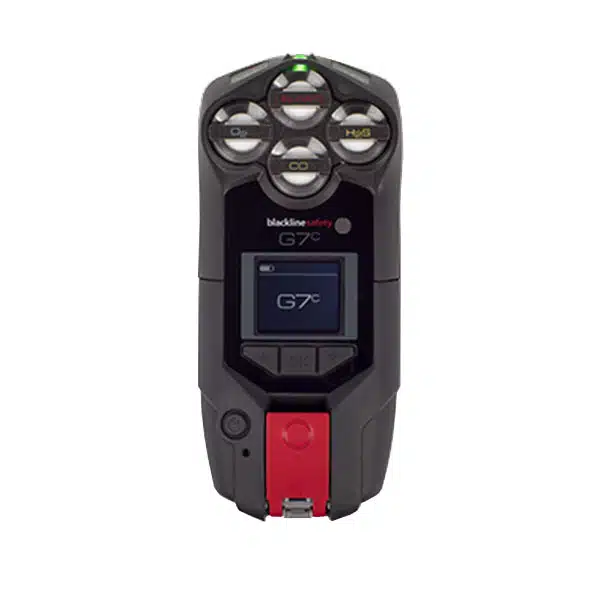
Blackline G7 Multi-Gas Pumped Detector
- Gas Detection Class Multi Gas, Portable
- ATEX ATEX
- Gas Type Sulfur Dioxide - SO2, Carbon Monoxide - CO, Chlorine - Cl2, Chlorine Dioxide - ClO2, VOCs, Flammable - LEL, Hydrogen Cyanide, Hydrogen Fluoride - HF, Hydrogen Sulfide - H2S, Nitrogen Dioxide - NO2, Oxygen - O2, Ammonia - NH3, Ozone - O3, Carbon Dioxide - CO2
- Response Time Varied
- Battery Run Time 18 hours
- Brand Blackline Safety
View productSKU: G8-MULTI-GAS-NP
Blackline G8 Multi-Gas Detector (No Pump)
- Gas Detection Class Multi Gas, Portable
- ATEX ATEX
- Gas Type Carbon Monoxide - CO, Sulfur Dioxide - SO2, Chlorine - Cl2, Chlorine Dioxide - ClO2, PID, Flammable - LEL, VOCs, Hydrogen - H, Hydrogen Cyanide, Hydrogen Fluoride - HF, Hydrogen Sulfide - H2S, Nitrogen Dioxide - NO2, Ammonia - NH3, Oxygen - O2, Carbon Dioxide - CO2, Ozone - O3
- Response Time Varied
- Battery Run Time 18 hours
- Brand Blackline Safety
View productSKU: G8-SINGLE-GAS
Blackline G8 Multi-Gas Detector (Single Gas)
- Gas Detection Class Portable, Single Gas
- ATEX ATEX
- Gas Type Chlorine Dioxide - ClO2, Flammable - LEL, PID, VOCs, Hydrogen - H, Hydrogen Cyanide, Hydrogen Fluoride - HF, Hydrogen Sulfide - H2S, Nitrogen Dioxide - NO2, Ammonia - NH3, Oxygen - O2, Carbon Dioxide - CO2, Ozone - O3, Carbon Monoxide - CO, Sulfur Dioxide - SO2, Chlorine - Cl2
- Response Time Varied
- Battery Run Time 18 hours
- Brand Blackline Safety
View product- BEST SELLER
SKU: G8-MULTI-GAS
Blackline G8 Multi-Gas Pumped Detector
- Gas Detection Class Multi Gas, Portable
- ATEX ATEX
- Gas Type Oxygen - O2, Carbon Dioxide - CO2, Ozone - O3, Carbon Monoxide - CO, Sulfur Dioxide - SO2, Chlorine - Cl2, Chlorine Dioxide - ClO2, PID, Flammable - LEL, VOCs, Hydrogen - H, Hydrogen Cyanide, Hydrogen Fluoride - HF, Hydrogen Sulfide - H2S, Nitrogen Dioxide - NO2, Ammonia - NH3
- Response Time Varied
- Battery Run Time 18 hours
- Brand Blackline Safety
View product SKU: SMART 3G-C3
Crowcon SMART 3G-C3 Fixed Gas Detector
- Gas Detection Class Fixed
- ATEX ATEX
- Temperature -40 / +60°C
- Output 4-20 mA, 1 or 3 relay boards, RS485
- Brand Crowcon
- Part Numbers Crowcon Smart 3G-C1 - R1234ze, Infrared, 0-2000 ppm, Crowcon SMART 3G-C3 - Flammable gas, Infrared sensor, Butane 0-100% LEL, Crowcon Smart 3G-C3 - R454b, Infared, 0-100% LEL, Crowcon Smart 3G-C4 - R404a, Infrared, 0-2000 ppm, Crowcon SMART 3G-C3 - Flammable gas, Infrared sensor, LPG 0-100% LEL, Crowcon Smart 3G-C3 - R454c, Infrared, 0-100% LEL, Crowcon Smart 3G-C4 - R407a, Infrared, 0-2000 ppm, Crowcon SMART 3G-C3 - Toxic gas, electrochemical sensor, Oxygen 0-25% Vol, Crowcon Smart 3G-C3 - R32, Infrared, 0-100% LEL, Crowcon SMART 3G-C3 - Flammable gas, catalytic sensor, Methane 0-100% LEL, Crowcon Smart 3G-C4 - R407f, Infrared, 0-2000 ppm, Crowcon SMART 3G-C3 - Toxic gas, electrochemical sensor, CO 0-500ppm, Crowcon Smart 3G-C3 - R1234yf, Infrared, 0-100% LEL, Crowcon SMART 3G-C3 - Flammable gas, catalytic sensor, LPG 0-100% LEL, Crowcon Smart 3G-C4 - R449, Infrared, 0-2000 ppm, Crowcon SMART 3G-C3 - Toxic gas, electrochemical sensor, Ethylene 0-200ppm, Crowcon Smart 3G-C3 - R1234ze, Infrared, 0-100% LEL, Crowcon SMART 3G-C3 - Flammable gas, catalytic sensor, Propane 0-100% LEL, Crowcon Smart 3G-C5 - R507a, Infrared, 0-2000 ppm, Crowcon SMART 3G-C3 - Toxic gas, electrochemical sensor, Ammonia 0-100ppm, Crowcon Smart 3G-C3 - R32, Infrared, 0-2000 ppm, Crowcon SMART 3G-C3 - Flammable gas, catalytic sensor, Butane 0-100% LEL, Crowcon Smart 3G-C4 - R410a, Infrared, 0-2000 ppm, Crowcon SMART 3G-C3 - Toxic gas, electrochemical sensor, H2S 0-50ppm, Crowcon Smart 3G-C1 - R134a, Infrared, 0-2000 ppm, Crowcon SMART 3G-C3 - Flammable gas, catalytic sensor, Petrol Vapours 0-100% LEL, Crowcon Smart 3G-C4 - R417a, Infrared, 0-2000 ppm, Crowcon SMART 3G-C3 - Toxic gas, electrochemical sensor, Nitric Oxide 0-100ppm, Crowcon Smart 3G-C6 - SF6, Infrared, 0-2000 ppm, Crowcon SMART 3G-C3 - Flammable gas, catalytic sensor, Hydrogen 0-100% LEL, Crowcon Smart 3G-C4 - R448, Infrared, 0-2000 ppm, Crowcon SMART 3G-C3 - Toxic gas, electrochemical sensor, Hydrogen 0-2000ppm, Crowcon Smart 3G-C1 - R125, Infrared, 0-2000 ppm, Crowcon SMART 3G-C3 - Flammable gas, Infrared sensor, Methane 0-100% LEL, Crowcon SMART 3G-C3 - Toxic gas, electrochemical sensor, Hydrogen 0-3000ppm, Crowcon Smart 3G-C1 - R1234yf, Infrared, 0-2000 ppm, Crowcon SMART 3G-C3 - Flammable gas, Infrared sensor, Propane 0-100% LEL
View productSKU: SMART 3G-D2
Crowcon SMART 3G-D2 Fixed Gas Detector
- Gas Detection Class Fixed
- ATEX ATEX
- Temperature -40 / +60°C
- Gas Type R134A, R417A, Hydrogen Sulfide - H2S, Ethylene oxide - ETO, R32, Ethyl Acetate, R448, R404A, Acetylene - C2H2, Cyclohexane, R454B, Ammonia - NH3, SF6, Benzene - C6H6, Ethylene, R152A, Butane - C4H10, Butadiene, R407A, Carbon Monoxide - CO, Acetic Acid, R407F, Ethane - C2H6, R1234YF, R449A, Ethanol - C2H6O, Cyclopentane, R1234ZE, R507A, Heptane - C7H16, Dimethyl Ether, R125, R410A, Hydrogen - H, Ethyl Ether
- Output 4-20 mA, 1 or 3 relay boards, RS485
- Brand Crowcon
- Part Numbers SMART 3G-D2, Flammable Cat Sensor, Methane 0-100% LEL, SMART 3G-D2, Flammable Cat Sensor, LPG 0-100% LEL, SMART 3G-D2, Flammable Cat Sensor, Butane 0-100% LEL, SMART 3G-D2, Flammable Cat Sensor, Propane 0-100% LEL, SMART 3G-D2, Flammable Cat Sensor, Petrol Vapours 0-100% LEL, SMART 3G-D2, Flammable Cat Sensor, Acetone 0-100% LEL, SMART 3G-D2, Flammable Cat Sensor, Hydrogen 0-100% LEL
View productSKU: 8103261
Drager Detection Tubes (Oxygen 5/c)
- Brand Dräger
- Product Type Gas Tubes
- Gas Type Oxygen - O2
- Measuring Range 5 to 23 vol%
View productSKU: 3735430
Dräger X-am 2600 Multi-Gas Detector
- Gas Detection Class Portable, Multi Gas
- ATEX ATEX
- Gas Type Carbon Monoxide - CO, Flammable - LEL, Hydrogen Sulfide - H2S, Methane - CH4, Oxygen - O2
- Response Time Varied
- Data Logging Application of an optimised data compression method with high accuracy and large storage capacity.
- Brand Dräger
View productSKU: 8328412
Dräger X-am 3500 Multi-Gas Detector
- Gas Detection Class Multi Gas, Portable
- ATEX ATEX
- Gas Type Hydrogen Sulfide - H2S, Nitrogen Dioxide - NO2, Oxygen - O2, Sulfur Dioxide - SO2, Carbon Monoxide - CO
- Response Time Varied
- Data Logging 24 MB, e.g. at 10 minutes per hour of gas exposure with measuring values changing by the second on all 4 channels: approx. 600 hours
- Brand Dräger
View productSKU: 3703850
Dräger X-am 5800 Multi-Gas Detector
- Gas Detection Class Multi Gas, Portable
- ATEX ATEX
- Gas Type Hydrogen Sulfide - H2S, Methane - CH4, VOCs, Nitrogen Dioxide - NO2, Nitric Oxide - NO, Oxygen - O2, Ozone - O3, Ammonia - NH3, Phosphine - PH3, Carbon Dioxide - CO2, Sulfur Dioxide - SO2, Carbon Monoxide - CO, Ethylene Oxide - C2H4O, Hydrogen Cyanide, Phosgene - COCl2
- Response Time Varied
- Data Logging Application of an optimised data compression method with high accuracy and large storage capacity.
- Brand Dräger
View productSKU: 8325800/6
Dräger X-am 8000 Multi-Gas Detector
- Gas Detection Class Multi Gas, Portable
- ATEX ATEX
- Gas Type Oxygen - O2, Sulfur Dioxide - SO2, VOCs, Carbon Dioxide - CO2, Carbon Monoxide - CO, Hydrogen Sulfide - H2S, Nitrogen Dioxide - NO2
- Response Time Varied
- Battery Run Time Up to 42 hours
- Data Logging Up to 400 hours
- Brand Dräger
View productSKU: MGC-IR-PUMP
GasClip MGC Pump Multi-Gas Detector
- Gas Detection Class Multi Gas, Portable
- ATEX ATEX
- Gas Type Carbon Monoxide - CO, Flammable - LEL, Hydrogen Sulfide - H2S, Oxygen - O2
- Battery Run Time Up to 52 hours
- Data Logging 25 events
- Brand Gas Clip Technologies
View product




FAQs
Oxygen (O₂) is a colourless, odourless, and tasteless gas that makes up approximately 20.9% of the Earth’s atmosphere.
Oxygen deficiency occurs when oxygen levels fall below normal atmospheric concentrations (20.9%).