


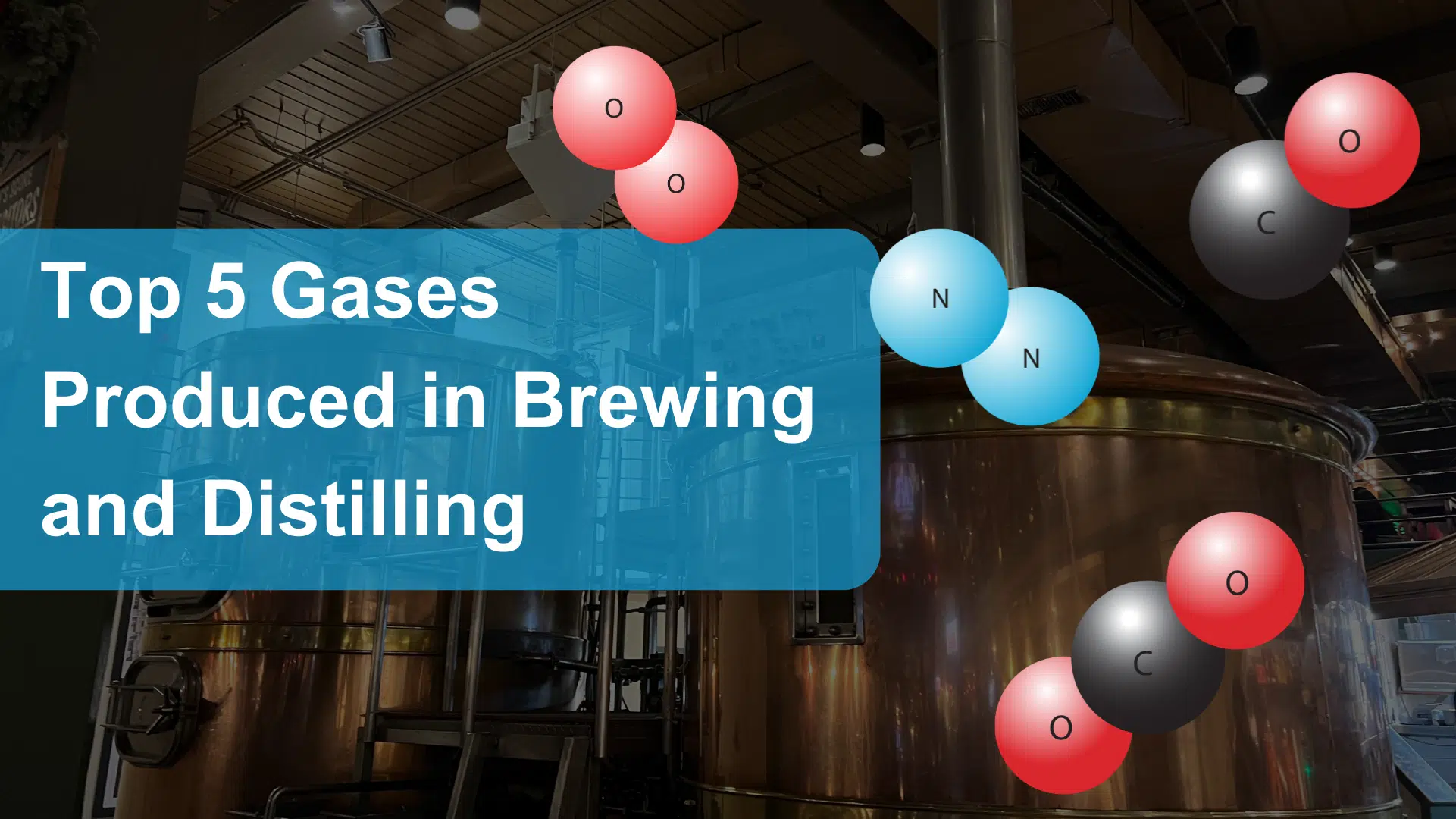
5 Gases Produced in Distilling and Brewing
Breweries and distilleries are busy places where fermentation, distillation, and storage processes release different gases. Some of these gases are vital for production, but they can also be dangerous if not monitored properly. Without proper care, they can affect worker safety and product quality.
To keep operations safe, it’s important to understand which gases are present and their potential risks.
Carbon Dioxide (CO2)
Carbon dioxide is a natural by-product of fermentation. It is released in large quantities during brewing and distilling. While necessary for carbonation and other processes, CO2 can be dangerous in confined spaces. Since it is heavier than air, CO2 can gather in low-lying areas, displacing oxygen and creating an asphyxiation risk. High CO2 levels can cause dizziness, headaches, and even unconsciousness.

Oxygen (O2)
Oxygen levels need careful monitoring for two primary reasons. First, too much oxygen exposure can cause spoilage and off-flavours in beer and spirits. Second, oxygen displacement by CO2 or nitrogen (N2) can create an environment with dangerously low oxygen levels, leading to asphyxiation. Monitoring oxygen concentrations ensures both product quality and worker safety.

Carbon Monoxide (CO)
Carbon monoxide can be produced by combustion processes, such as using gas-powered forklifts, boilers, and generators. CO is colourless and odourless. Therefore, it is particularly dangerous and can cause symptoms like nausea, dizziness, confusion, and, at high levels, death. Installing CO detectors in areas with combustion equipment helps keep employees safe.

Nitrogen (N2)
Nitrogen is widely used in breweries and distilleries to purge tanks, push beer through lines, and prevent oxidation. However, because nitrogen is an inert gas, it can displace oxygen in confined spaces, creating a suffocation hazard. Without proper monitoring, workers may not notice oxygen depletion until it is too late.

Ethanol Vapours
Ethanol is a key component in distilleries. However, its vapours can accumulate and pose both health and explosion risks. Ethanol is highly flammable, and poor ventilation can lead to dangerous vapour levels. Additionally, prolonged exposure to ethanol fumes can cause dizziness, respiratory irritation, and other health effects. Proper monitoring and explosion-proof ventilation systems help mitigate these risks.
