



How does carbon capture, utilisation and storage work?

The image to the left shows the process of carbon capture from start to finish.
- Source
- Capture
- Compression
- Transportation
- Utilisation
- Storage
1) Source
For CCUS, carbon is captured from a variety of emission sources, including:
- Atmosphere: capturing CO₂ directly from the air
- Power plants: natural gas, coal, and biomass facilities
- Industrial facilities: steel manufacturing, cement production, and chemical processing

2) Capture
Various carbon capture methods are used to separate CO₂ from other gases generated during industrial processes:
- Pre-combustion capture: converts fuel into syngas and removes CO₂ before combustion takes place.
- Oxy-fuel combustion capture: burns fuel in pure oxygen to create a concentrated CO₂ stream.
- Post-combustion capture: captures CO₂ after combustion, although additional purification may be required.
- Direct air capture (DAC): extracts CO₂ directly from the atmosphere using solvent- or sorbent-based technologies.

3) Compression
Captured CO₂ is compressed into a supercritical state to support efficient transportation and storage. The compression process typically includes:
- Multi-stage compression: CO₂ is compressed through several stages, with pressure increasing at each stage.
- Cooling: CO₂ is cooled to remove the heat generated during the compression process.
Converting CO₂ into a supercritical state improves transport efficiency and cost-effectiveness, while also introducing specific technical and safety considerations.

4) Transportation
Captured CO₂ can be transported to storage or utilisation sites using a range of methods, including:
- Pipelines: the primary transport method for moving large volumes of CO₂ over land.
- Ships: a practical option when pipelines are not viable, particularly for longer distances or smaller quantities.
Effective technical and safety management is essential, as supercritical CO₂ can contribute to corrosion in pipelines and equipment, especially when impurities such as water or H₂S are present.

5) Utilisation
Captured CO₂ can be put to practical use in a variety of applications, including:
- Enhanced oil recovery (EOR): CO₂ is injected into oil reservoirs to help increase production rates.
- Fuels and chemicals: CO₂ is used in the production of synthetic fuels, low-carbon chemicals, and polycarbonate plastics.
- Construction materials: CO₂ can be incorporated into concrete and other building materials to enhance performance and durability.
- Biological applications: CO₂ supports the growth of organisms such as algae for biofuel production and can also be used in wastewater treatment processes.
- Food and beverage: CO₂ is widely used in carbonated drinks and modified atmosphere packaging (MAP) to help extend product shelf life.

6) Storage
Captured CO₂ can be safely stored by injecting it into suitable underground formations, including:
- Deep geological formations: stable underground rock structures that provide secure long-term CO₂ storage.
- Deep saline aquifers: porous rock formations filled with saline water that can accommodate large volumes of CO₂.
- Mineral storage: CO₂ reacts naturally with calcium- or magnesium-rich minerals to form stable carbonate compounds.
These storage methods are designed to securely contain CO₂ over the long term, helping to reduce emissions and support decarbonisation efforts.

What are the challenges?
Capture
Pre-combustion:
CH4, CO2, H2, CO
Oxy-fuel combustion:
CH4, CO2, N2, O2 enrichment
Post-combustion:
CO2, N2 (O2 displacement), CH4, SO2
Compression
In its supercritical state, CO2 can react with impurities (Example: H2O, N2, O2, H2S, and SO2) that may corrode equipment and pipelines, potentially causing hazardous gas leaks.
Transportation
Leakage caused by impurities (Example: H2O, O2, H2S, H2 and SO2) in transported CO2 can negatively impact the storage and transportation conditions for LCO2 (Liquefied Carbon Dioxide) carriers.
Storage
Impurities can affect storage by increasing the risk of corrosion leading to leaks and other safety hazards.
CO2 leakage can result from injection well failure, geological faults, or poorly sealed wells.
What are the gas risks?
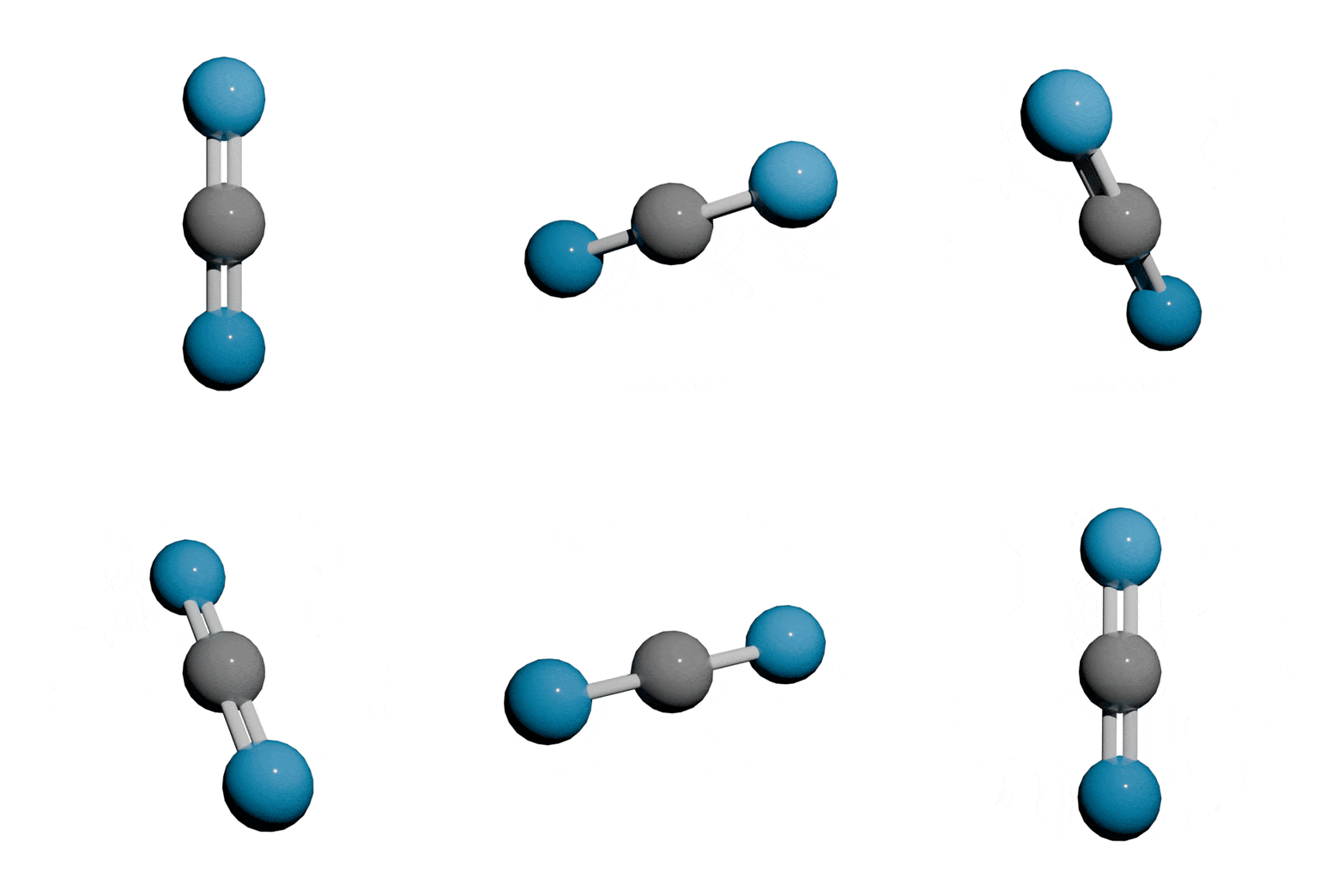


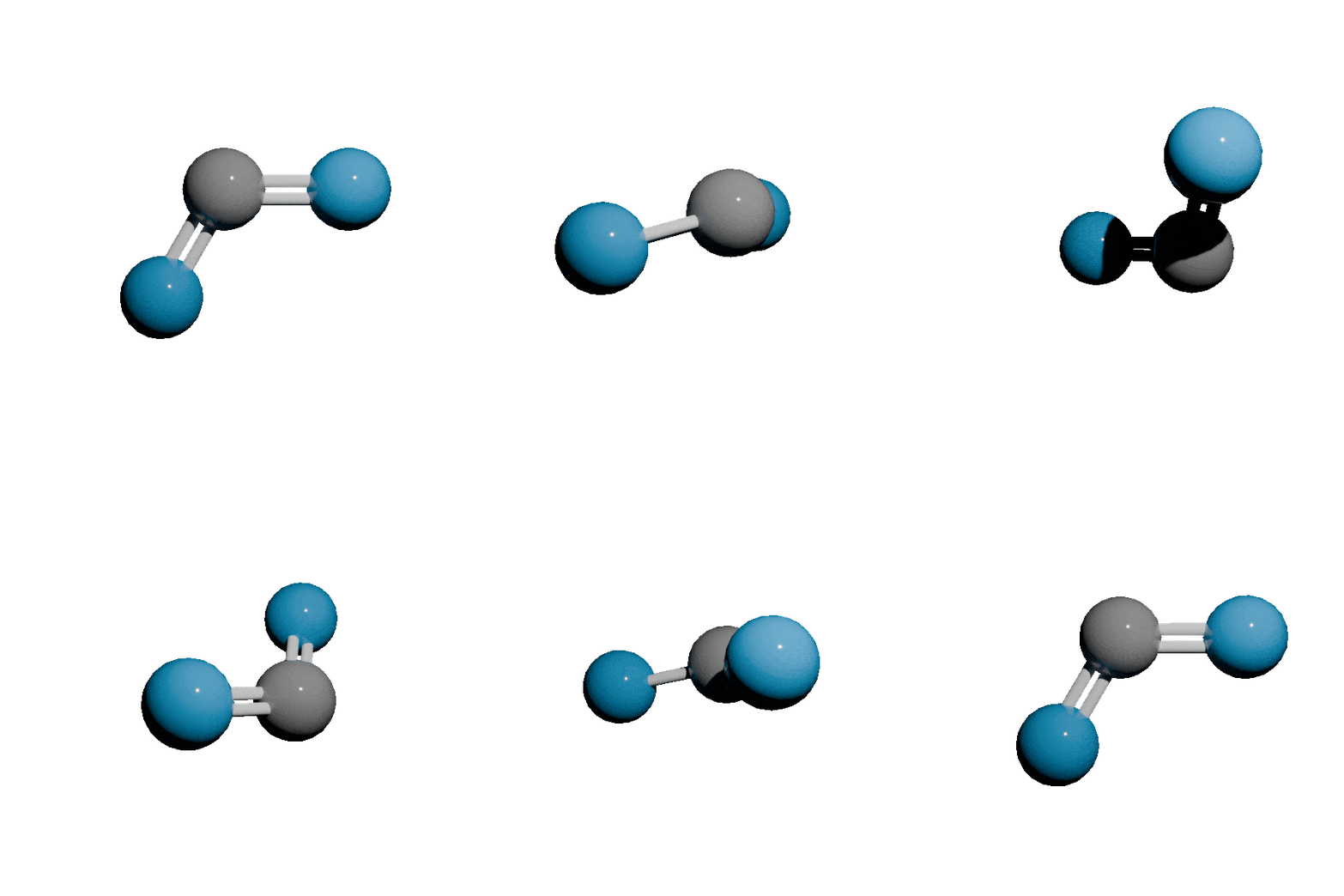

Learn how a layered approach to detection enhances safety across carbon capture, utilisation & storage operations.
How can Rockall Safety support you?
ULTIMA® X5000 Point Gas Detector
Point gas detector to detect toxic gases, oxygen deficiency, and flammable gases.
- Different types of sensors available: point IR sensors for detecting CO2 and hydrocarbons, catalytic bead sensors for flammable gases, and electrochemical sensors for toxic gases like H2S, SO2, and CO, and for monitoring oxygen levels
- Dual sensor capability to detect different gases using one transmitter
- Long calibration cycles of up to two years for MSA XCell® gas sensors with TruCal® technology*
*NOTE: Only available for H2S and CO

General Monitors® S5000 Point Gas Detector
Point gas detector to detect toxic gases, oxygen deficiency, and flammable gases.
- Ultimate gas detector for extreme environments with different types of sensors available: point IR sensors for detecting hydrocarbons, catalytic bead sensors for flammable gases, and electrochemical sensors for toxic gases like H2S, SO2, and CO, and for monitoring oxygen levels
- Dual sensor capability to detect different gases using one transmitter
- Long calibration cycles of up to two years for MSA XCell® gas sensors with TruCal® technology*
*NOTE: Only available for H2S and CO
