



Introduction
Whether you are a business owner looking to upgrade your cooling systems, simply curious about ammonia or looking to purchase an ammonia gas detector, this guide will provide you with a valuable insight into the world of ammonia refrigeration.
What’s that smell?
Ammonia is a colourless, reactive gas that is about half as heavy as air and easily dissolves in water. It has a strong odour reminiscent of urine, which can be detected even in small quantities by most people. Although ammonia gas itself is non-flammable, it is considered flammable because it can explode when mixed with air at certain concentrations and ignited.

Ammonia in Refrigeration Systems
How Does Ammonia Refrigeration Work?
Ammonia refrigeration leverages the thermodynamic properties of ammonia to transfer heat from a designated area or product to the environment. This process involves several key components that work together to complete the refrigeration cycle.
Ammonia, a natural refrigerant, has excellent thermodynamic characteristics, such as a high latent heat of vaporisation and a low boiling point. The refrigeration process begins with the evaporation of liquid ammonia, which absorbs heat from the target space or product. The resulting gaseous ammonia is then compressed, raising its temperature and pressure, and moved to the condenser, where it cools and condenses back into a liquid. The liquid ammonia is subsequently expanded through an expansion valve, lowering its temperature and pressure, and the cycle restarts.
The Dangers of Ammonia
Ammonia, despite its many uses, can be dangerous to work with if proper precautions aren’t taken. Here’s a breakdown of the key dangers associated with exposure:
What we Recommend
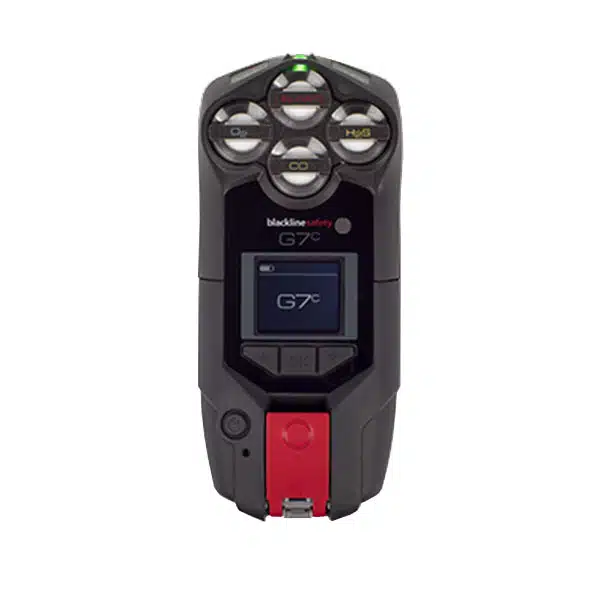
Blackline G7 Multi-Gas Detector
The G7 Portable Gas Detector uses cutting-edge sensors to detect a wide array of toxic and flammable gases, including ammonia.
Its advanced built-in comms and rapid response allow for real-time monitoring, which allows swift action in the event of leaks.
To find out more, visit our product page.
Drager PAC 8000 Gas Detector
The Dräger PAC 8000 is a great choice for individuals who require unwavering safety in tough environments.
This non-disposable, single-gas monitor boasts exceptional reliability and precision, singularly detecting hazardous concentrations of a diverse range of gases, including carbon dioxide and ammonia.
To find out more, visit our product page.

Honeywell BW Solo Gas Detector
The Honeywell BW Solo single gas detector is a portable, single-gas detector designed to keep workers safe in hazardous environments. It offers a unique combination of user-friendly operation, reliable performance, and easy maintenance, making it a valuable tool for a variety of industries.
To find out more, visit our product page.

