


Honeywell BW™ Flex 4/5
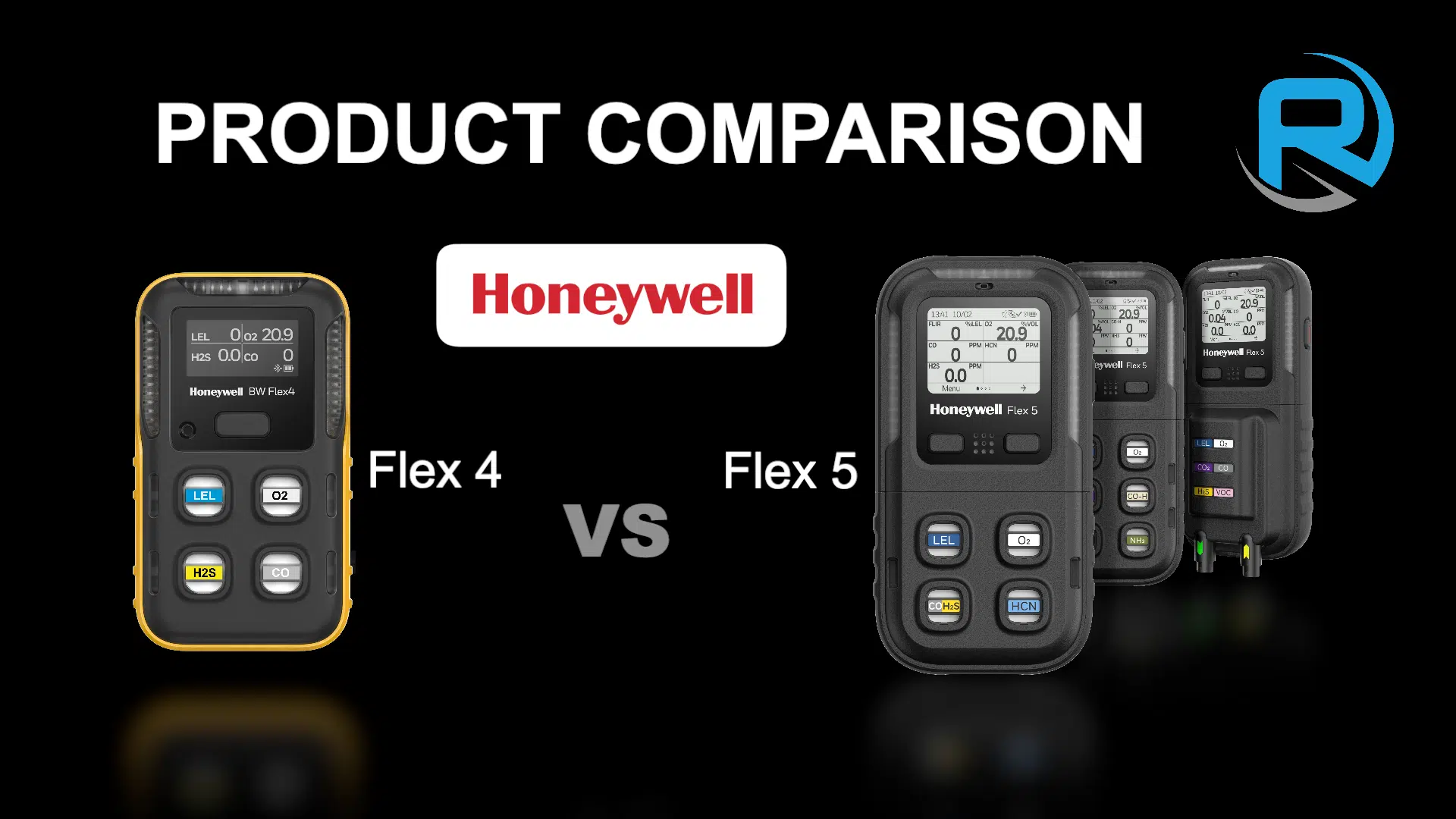
With a selection of 14 different sensor types, the Honeywell BW™ Flex 4/5 offers reliable protection against multiple gas hazards, all within a compact, durable, and user-friendly device. Whether you’re a specialist working in confined spaces or a general operative on-site, the BW Flex ensures continuous protection while simplifying safety compliance for your business. The standard version can detect O2, H2S, LEL and CO.
Exotic Gases
Exotic gases can pose serious risks or offer great benefits depending on how you use them. Learn how the BW Flex exotic sensors can help you handle them safely and efficiently in your industry.

CO2 Sensor – Exotic Sensors
As the number of applications involving potential exposure to high levels of carbon dioxide (CO₂) increases, dedicated gas detection is becoming essential—often making the difference between life and death.
A common question we hear is: “Can’t I just use an oxygen sensor to detect dangerous CO₂ levels, like I would for nitrogen?” If CO₂ were only an asphyxiant, that might be enough. However, CO₂ is also toxic, with harmful effects starting at much lower levels than an oxygen sensor can detect.
To trigger a low alarm on a standard oxygen detector, CO₂ would need to reach around 7% volume (70,000 ppm)—14 times higher than the EU’s occupational exposure limit of 5,000 ppm. This means oxygen detection alone offers inadequate protection.
A dedicated CO₂ sensor provides both instantaneous alarms and time-weighted exposure limits (TWA & STEL), often required by local legislation. Levels above 5% CO₂ can lead to serious health effects including confusion, hyperventilation, and potentially unconsciousness or death. Typical 8-hour exposure limits are just a tenth of that, reinforcing the need for proper CO₂ monitoring.

HCN Sensor – Exotic Sensors
While most adults can tolerate short-term exposure to 50–60 ppm of HCN without lasting harm, concentrations of 100–200 ppm can be fatal within 10 to 60 minutes, and 200–500 ppm over 30 minutes is typically deadly. At 2000 ppm, death can occur in just one minute.
The OSHA time-weighted average (TWA) limit for HCN is just 10 ppm, and its lower explosive limit (LEL) is 5.6%, making it both highly toxic and flammable. The Immediately Dangerous to Life or Health (IDLH) level, set by NIOSH, is 50 ppm, underscoring how little exposure is needed to pose a serious risk.
These figures make one thing clear: in any environment where HCN is present, dedicated sensors are absolutely essential for protecting life and health.

NO2 Sensor – Exotic Sensors
Nitrogen dioxide (NO₂) is found both indoors and outdoors, and often without obvious sources, exposure can be a risk even in open-air environments like construction and agriculture. Its presence in ambient air is common, and because its odour isn’t always noticeable, it can easily be inhaled without warning. That’s why dedicated NO₂ sensors are essential for detecting its presence and alerting nearby workers.
NO₂ is toxic at varying levels, with the impact depending on a person’s health and age. Inhalation can cause lung injury, asphyxiation, and long-term systemic effects. Once in the bloodstream, it reacts with haemoglobin to form methemoglobin, reducing the blood’s ability to carry oxygen—potentially harming internal organs and unborn babies.
Even at low concentrations, NO₂ can cause coughing, fatigue, nausea, and irritation of the eyes, nose, and throat. At higher levels, symptoms escalate to headaches, abdominal pain, shortness of breath, and potentially serious respiratory damage. Exposure is often unrecognised at first, and prolonged contact allows deeper penetration into the lungs, increasing the risk of delayed injury.
Given the wide range of health effects and the potential for unnoticed exposure, it’s crucial to monitor not just the presence of NO₂, but also its concentration levels in real time.

Cl2 Sensor – Exotic Sensors
Like many hazardous industrial gases, chlorine (Cl₂) is highly toxic and its dangers are well established. In fact, it was the first poison gas used as a weapon during World War I.
At room temperature, chlorine exists as a gas that is more than twice as dense as air, causing it to settle close to the ground, making accidental inhalation during a leak or spill more likely. The risk increases when Cl₂ reacts with other common industrial substances such as ammonia, hydrogen, natural gas, or petroleum-based products like gasoline and solvents. These reactions can result in explosive compounds, making early detection of leaks or spills absolutely critical.
Health effects vary depending on exposure. Low-level exposure can cause eye and skin irritation, while higher concentrations may result in severe chemical burns or ulcers. Prolonged or repeated exposure, particularly in workplace settings, can lead to noncardiogenic pulmonary edema and tooth corrosion. Contact with compressed liquid chlorine can cause frostbite to the skin and eyes.
Symptoms escalate with concentration and exposure time. At 1–3 ppm, Cl₂ irritates the eyes and mucous membranes. At 15 ppm, pulmonary symptoms begin. Inhalation of concentrations above 30 ppm can cause chlorine to react with moisture in the lungs, forming hydrochloric acid (HCl) and hypochlorous acid (HOCl), both capable of causing severe internal burns and lasting damage.

New Dual Toxic Sensor
Honeywell are now expanding their offering to include a dual toxic sensor for carbon monoxide and hydrogen sulfide (COSH).
This addition allows users to detect up to five gases simultaneously within a single device, combining up to four sensors from a selection of 13 different types.
For more information on the Flex4, download the following guide: Click here.
For more information on the sensor types, click here.
Alternatively, visit the product page here.
