

What is %Vol?
%Vol (percent by volume) is a way of measuring the concentration of a gas by expressing it as a percentage of the total air or gas mixture. It is commonly used for gases present at higher concentrations, such as oxygen, carbon dioxide and methane where using a percentage is more practical than reporting very large ppm values. The illustration to the right shows how gas displaces ambient air within an enclosed space. For example, normal atmospheric oxygen is approximately 20.9% Vol, meaning oxygen makes up 20.9% of the air we breathe.


What is %LEL?
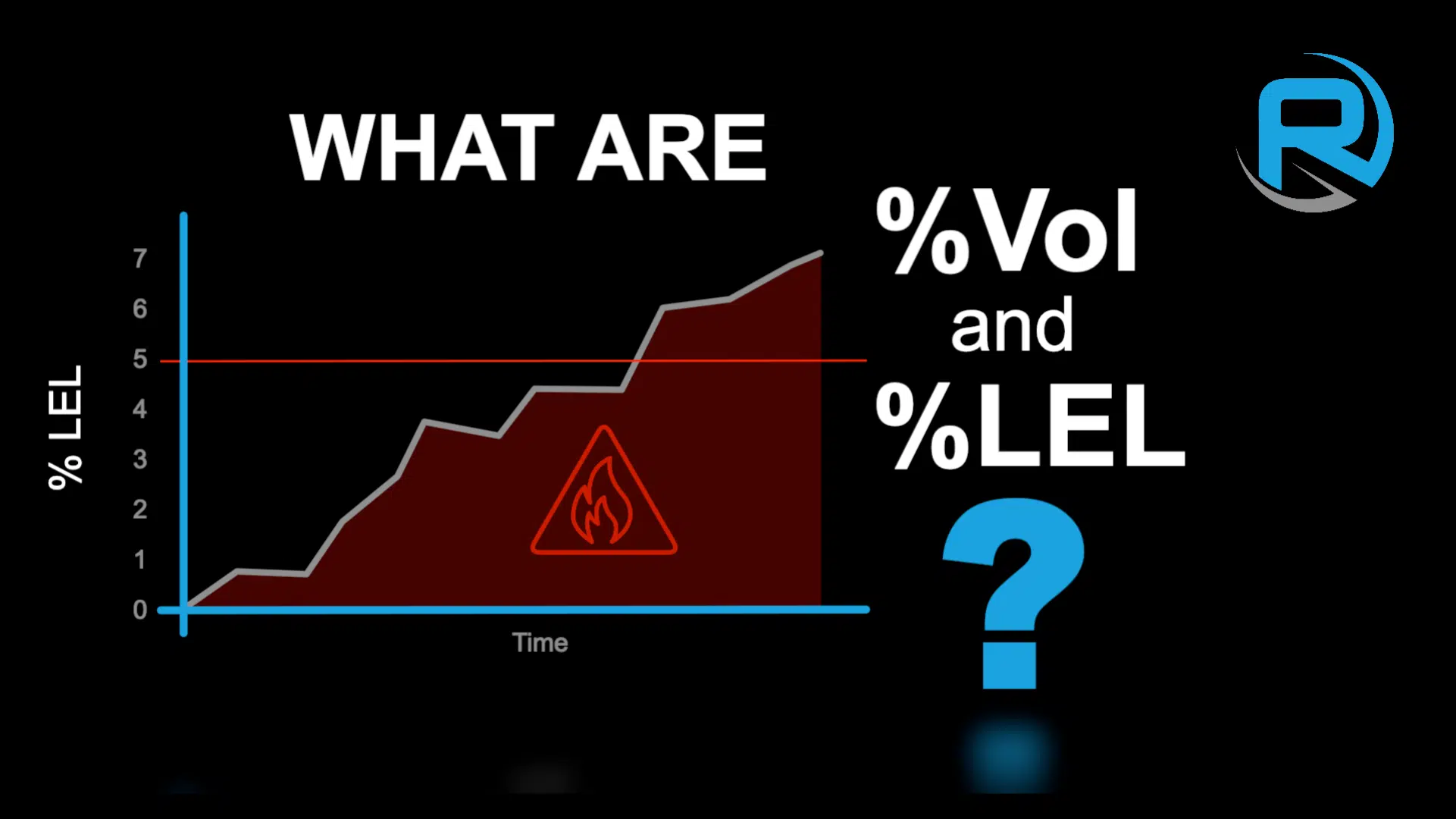
Combustible gases have a Lower Explosive Limit (LEL), which is the minimum concentration of a gas in air at which it can ignite if an ignition source is present. The LEL varies depending on the gas. For example methane has an LEL of 5% Vol in air meaning that when methane reaches this concentration, the atmosphere can become flammable.
If a gas detector only alarmed once the atmosphere reached 100% LEL, workers would already be in an extremely hazardous environment. Gas detectors are configured to alarm at a percentage of the LEL, providing an early warning before explosive conditions are reached.
Why would you use %Vol or %LEL over PPM?
PPM is used to measure very low concentrations of toxic gases that can harm people even at trace levels. %Vol is used for gases present at higher concentrations, such as oxygen or carbon dioxide, because it expresses the proportion of the gas in air as a percentage. At these concentrations, percentages are much easier to interpret than large ppm values and provide a clearer picture of the atmosphere’s composition.
%LEL is used for combustible gases because it indicates how close the gas concentration is to becoming flammable. This is more useful than displaying the exact concentration, as it enables users to quickly assess the risk of fire or explosion and respond before dangerous conditions are reached.
