

What is Ammonia (NH3)?
Ammonia (NH₃) is a colourless, pungent gas composed of one nitrogen atom covalently bonded to three hydrogen atoms, and it is one of the most important inorganic chemicals in both natural and industrial systems. As a simple nitrogen hydride, ammonia plays a role in the global nitrogen cycle, being produced naturally through the decomposition of organic matter and by nitrogen-fixing microorganisms. Industrially, it is synthesised primarily via the Haber–Bosch process, which combines nitrogen from the air with hydrogen under high pressure and temperature in the presence of a catalyst. Ammonia is highly soluble in water, forming a weakly alkaline solution known as ammonium hydroxide, and is widely used in the manufacture of fertilisers, explosives, cleaning agents, and as a refrigerant.
Where is Ammonia (NH3) found?
Ammonia originates from both natural biological processes and large-scale industrial production. In natural environments, ammonia is generated through the microbial decomposition of organic matter and the metabolic activity of nitrogen-fixing bacteria, which convert atmospheric nitrogen into biologically usable forms within soils and aquatic systems. Volcanic activity and the breakdown of animal waste also contribute smaller quantities to the natural ammonia burden in the atmosphere. Industrially, the vast majority of ammonia is produced synthetically via the Haber–Bosch process, in which nitrogen extracted from air reacts with hydrogen, typically derived from natural gas, under high temperature and pressure.
Health Risks Relating to Ammonia (NH3)
Exposure to ammonia presents significant health risks due to its toxic, corrosive, and irritant properties, particularly at elevated concentrations. ammonia readily dissolves in moisture on the skin, eyes, and respiratory tract, forming alkaline solutions that can cause chemical burns and tissue damage.
Acute exposure may result in irritation of the eyes, nose, and throat, coughing, chest tightness, and shortness of breath, while higher concentrations can lead to severe lung injury, pulmonary oedema, or even fatal respiratory failure. Prolonged or repeated exposure to lower levels may cause chronic respiratory conditions, reduced lung function, and persistent eye irritation.
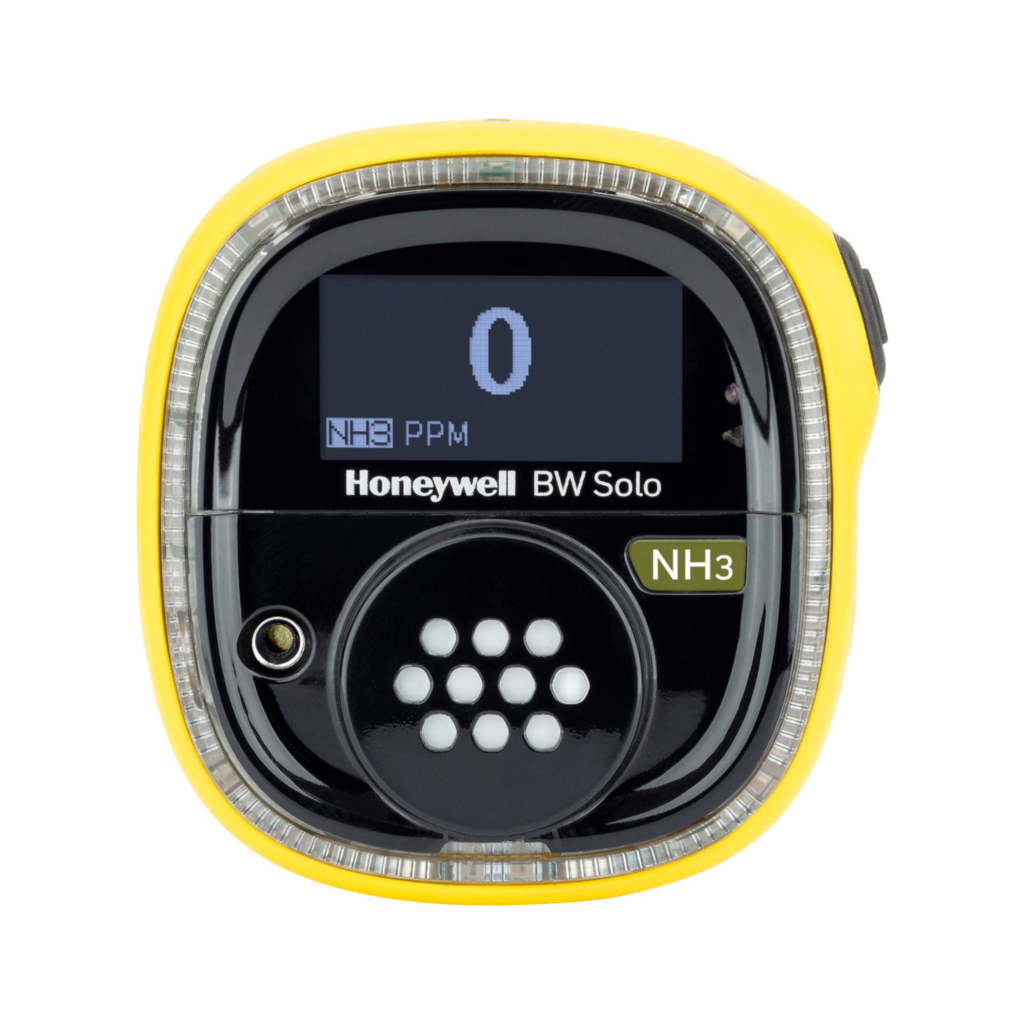
Honeywell BW Solo (Ammonia NH3)
The Honeywell BW Solo Wireless Single Gas Detector is a highly regarded portable single‑gas monitor designed for robust personal safety in hazardous work environments, offering a combination of simplicity, durability, and modern connectivity that supports effective gas hazard management. It is lightweight and compact, making it easy for workers to carry throughout a shift without fatigue, and features a clear, easy‑to‑read display with one‑button operation to ensure straightforward use even in challenging conditions. The detector provides audible, visual and vibrating alarms to alert users promptly when dangerous gas levels are detected, enhancing immediate hazard awareness on site.
For more information, click here: BW Solo Single Gas Detector | Rockall Safety