


IMO Updates Enclosed Space Entry Safety on Ships
The International Maritime Organisation (IMO) has issued Resolution MSC.581(110), introducing Revised Recommendations for Entering Enclosed Spaces Aboard Ships. These new requirements formally replace Resolution A.1050(27) and come into effect on 3 December 2025.
The updated guidance aims to reduce the continued loss of life associated with enclosed space entry by strengthening hazard identification, risk assessment, atmospheric testing, and emergency preparedness across all ship types.
CO₂ Safety and Gas Monitoring for Enclosed Spaces
One of the most significant updates in the revised IMO Recommendations is the stronger focus on carbon dioxide (CO₂). CO₂ is a potent asphyxiant that can cause rapid loss of consciousness and death, even when oxygen levels appear to be within acceptable limits. To address this risk, the IMO now requires CO₂ to be explicitly measured before entry into any enclosed space. CO₂ levels must be below 0.5% (5,000 ppm) for a space to be considered safe, if this threshold is exceeded, entry is strictly prohibited. CO₂ monitoring is now required alongside checks for oxygen, carbon monoxide, flammable gases (LEL), and other toxic gases identified during the risk assessment.
In line with this enhanced focus on atmospheric hazards, the revised guidance introduces mandatory personal gas detection for anyone entering an enclosed space. Personnel must be provided with calibrated and tested portable gas detectors capable of measuring oxygen (O₂), carbon dioxide (CO₂), carbon monoxide (CO), flammable gases or vapours (LEL), and any additional gases identified through the risk assessment process. Gas detection equipment must be able to operate effectively in oxygen-deficient atmospheres, reinforcing the need for suitable, well-maintained and properly calibrated gas detection devices to support safe enclosed space entry.

Enclosed Space Registers
The revised IMO Recommendations introduce a formal requirement for every vessel to maintain an Enclosed Space Register. This register must provide a clear overview of all enclosed spaces on board, including the physical and atmospheric hazards associated with each space, as well as the methods used for ventilation and atmospheric testing. It should also document any connections to adjacent or connected spaces, outline emergency rescue requirements, and include the estimated time needed to achieve safe ventilation prior to entry.
In addition, the revised guidance reinforces that connected and adjacent spaces must be treated as hazardous by default. These spaces can contain trapped or migrating dangerous atmospheres and must be tested and ventilated before entry. The IMO aims to improve hazard awareness and reduce the likelihood of incidents caused by unseen or unexpected atmospheric dangers.
Global Recommendation
The IMO’s Revised Recommendations for Entering Enclosed Spaces Aboard Ships (MSC.581(110)) are designed to enhance safety on a global scale. As an international body, the IMO sets standards that apply to all SOLAS-signatory countries, meaning these recommendations are relevant to virtually every commercial vessel operating worldwide. They are not limited to ships flagged in a single nation, such as the US, but are intended to guide ship operators, crews, port workers, and shore personnel across the globe.
Product Recommendation: Honeywell BW Flex
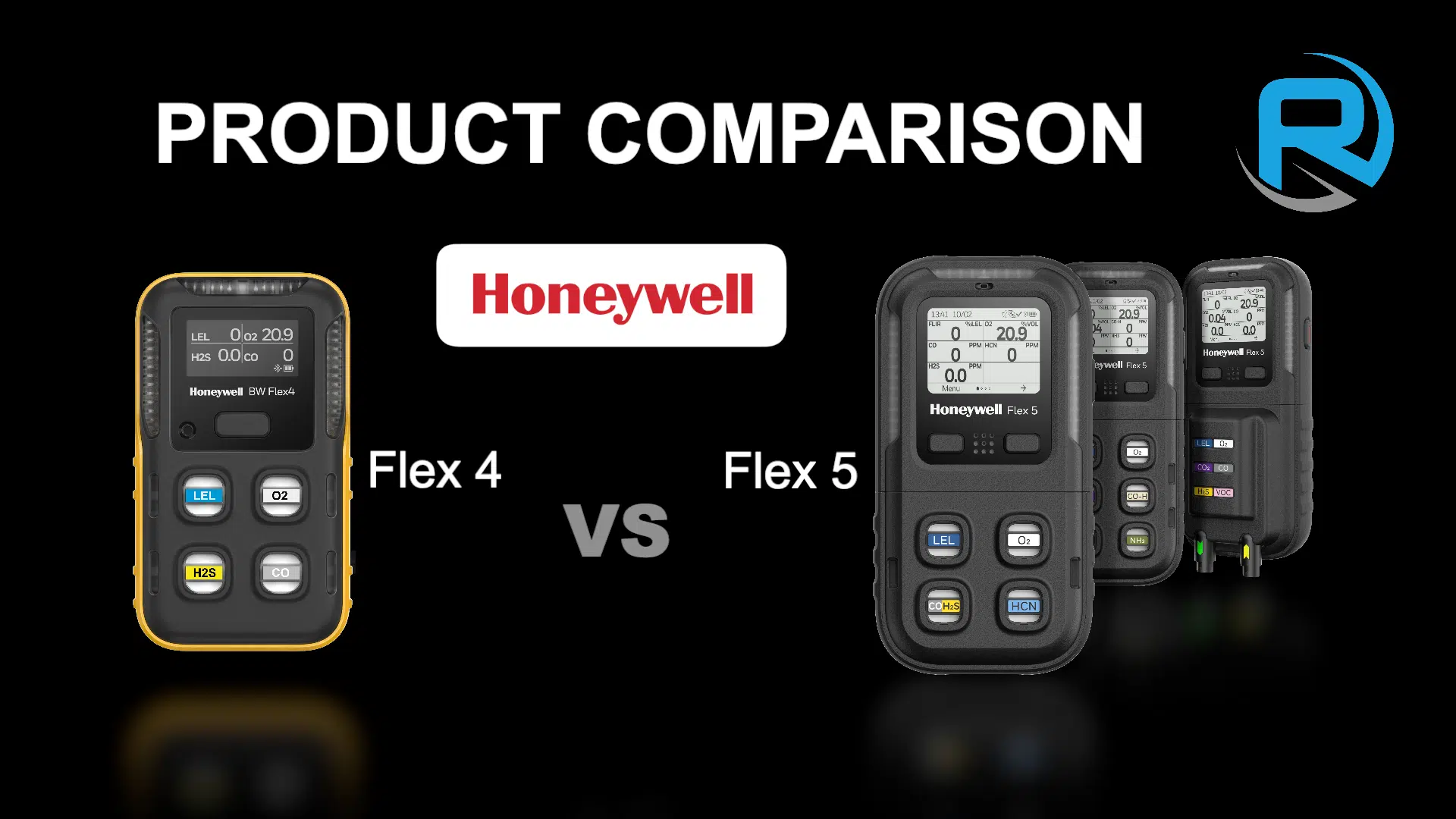
The BW Flex 4 is an ideal solution for complying with the IMO’s revised enclosed space entry recommendations because it provides reliable, real-time monitoring of multiple hazardous gases in a single, compact device. With support for up to four simultaneous gas sensors and a choice of 12 sensor types, including carbon dioxide (CO₂), oxygen (O₂), carbon monoxide (CO), and flammable gases (LEL), the Flex 4 directly addresses the key atmospheric hazards highlighted by MSC.581(110).
The large, high-resolution display and Bluetooth connectivity further enhance safety by allowing crews to monitor gas levels, receive alerts, and log data even in confined or hard-to-access areas. Rugged, versatile, and easy to use, the BW Flex 4 supports both global compliance and practical, everyday safety for crews working in potentially hazardous enclosed spaces.
For more information, click here: BW Flex 4 Multi-Gas Detector | Rockall safety

