


What is CO₂?
When we think of carbon dioxide, or CO₂ as scientists often call it, many of us immediately imagine it as the invisible gas we exhale when we breathe. Yet, CO₂ is all around us, and while it is a natural part of our atmosphere, it can pose serious risks in certain environments.
What is Cold Storage?
Cold storage simply refers to a facility where perishable goods, like fruits, vegetables, dairy, and meat, are kept at low temperatures to preserve their freshness. These are essentially giant refrigerated warehouses.
Why CO₂ Appears in Cold Storage
You might wonder why CO₂ would even be present in a cold storage facility. There are a few reasons:
- Some cold storage units use carbon dioxide as part of their refrigeration systems.
- Food itself, particularly fruits and vegetables, continues to respire after harvest, releasing small amounts of CO₂.
In large, enclosed spaces with limited ventilation, this gas can accumulate over time. While CO₂ is not poisonous in small amounts, high concentrations can displace oxygen, making it dangerous for anyone working inside. Workers may feel dizzy, short of breath, or even lose consciousness if levels become extreme.
Gas Detectors That Detect CO2
CO2 detectors are available in both portable and fixed formats, allowing for continuous monitoring or spot checks as required. Portable CO₂ detectors can be carried by workers to ensure the air is safe while entering storage areas, while fixed detectors are mounted at key points to provide real-time readings and trigger alarms if levels become hazardous. Below are some examples portable and fixed gas detectors available from Rockall Safety.
Portables
Product Recommendation: Honeywell BW Solo (CO2)
The Honeywell BW Solo Single Gas Detector is a highly effective solution for personal CO₂ monitoring, combining accuracy, reliability, and ease of use in a compact, wearable design. Carbon dioxide is a colourless, odourless gas that can quickly become dangerous in confined or poorly ventilated spaces.
The BW Solo is capable of detecting CO₂ in a wide measurement range from 0 to 50,000 ppm, with a resolution of 100 ppm, allowing workers to identify rising CO₂ levels early and take action before concentrations reach harmful thresholds. This makes it particularly suitable for environments such as breweries and drinks production, cold storage, confined spaces, wastewater treatment, laboratories, and carbon capture applications, where CO₂ exposure is a known risk.
For more information, click here: BW Solo Single Gas Detector | Rockall Safety


Product Recommendation: Drager PAC 8000
The Dräger Pac 8000 Single Gas Detector is a reliable and robust choice for personal CO₂ monitoring in demanding industrial environments. The Pac 8000 provides dependable, continuous monitoring to help protect workers from overexposure.
The Pac 8000 features a durable, impact-resistant design, making it well suited for industries where CO₂ risks are common, including drainage and wastewater, construction, oil and gas, mining, chemical processing, and food and drink production/storage.
For more information, click here: Dräger PAC 8000 Single Gas Detector | Rockall Safety
Fixed
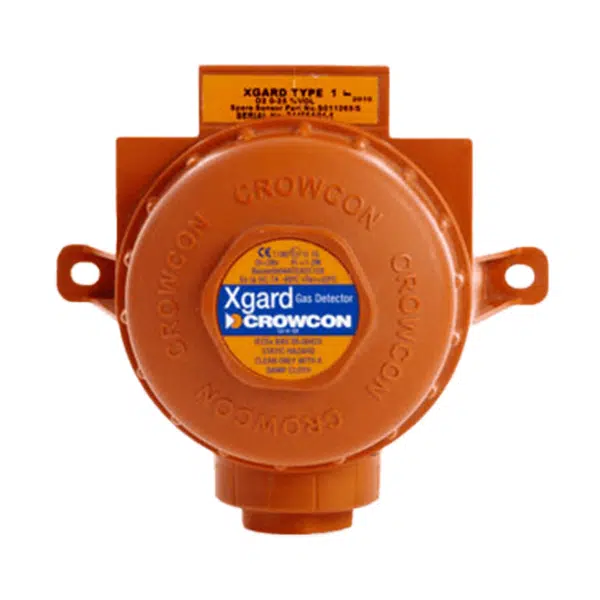
Product Recommendation: Crowcon Xgard
The Crowcon Xgard Fixed Gas Detector is a dependable and versatile solution for fixed CO₂ monitoring. Designed for continuous operation, the Crowcon Xgard provides round-the-clock CO₂ detection, helping to protect people by identifying elevated CO₂ levels before they become hazardous. This makes it particularly well suited to applications such as water and wastewater treatment, oil and gas facilities, power generation sites, manufacturing plants, food production/storage and other industrial environments where CO₂ is present as part of normal operations or process by-products.
For more information, click here: Crowcon Xgard Fixed Gas Detector | Rockall Safety

Product Recommendation: Honeywell Sensepoint XCD
The Honeywell Sensepoint XCD is a robust and versatile fixed-point gas detector designed to provide reliable monitoring of hazardous gases, including carbon dioxide (CO₂), in industrial environments.
The toxic and oxygen versions of the XCD monitor gases like carbon monoxide, hydrogen sulphide, and oxygen levels, while the flammable/infrared (IR) version can detect CO₂ concentrations from 0 to 2.00% v/v, making it particularly effective for applications where CO₂ is produced as part of processes or stored in high concentrations. This includes industries such as food and beverage processing/storage, breweries, wastewater treatment, chemical production, and power generation.
For more information, click here: Honeywell Sensepoint XCD Fixed Gas Detector | Rockall Safety
