



Introduction to Confined space entry
A confined space, as defined by the Health and Safety Executive (HSE), is any area that is fully or partially enclosed and presents a reasonably foreseeable risk to workers due to hazardous conditions within the space.
These risks can include fire or explosion from flammable substances, loss of consciousness caused by exposure to harmful gases or lack of oxygen, asphyxiation, or even drowning depending on the environment. What makes a space “confined” is not just its size or accessibility but the presence of these potential dangers.
Avoid confined spaces where possible
According to the Health and Safety Executive (HSE), the first priority when dealing with confined spaces is to avoid entry wherever possible. Alternative working methods such as remote tools or external access should always be considered before anyone enters a confined environment.
However, if entry cannot be avoided carry out a thorough risk assessment of the specific space. This assessment should identify all potential hazards and determine the appropriate control measures needed to reduce the risk to a safe level.
Different levels of confined space
Before entering any confined space it is important to understand that not all environments present the same level of risk. These spaces are typically categorised based on the hazards present and the likelihood of those hazards developing during the work, which in turn determines the level of control measures required.
These categories are generally split into the following levels:
Low-risk confined spaces typically include:
- Entry points that are shallow and easy to access
- Good natural or mechanical ventilation within the space
- Clear, simple, and unobstructed access routes
- No foreseeable risk of flooding or sudden inundation

Medium-risk confined spaces typically include:
- Entry and exit points that may be partially restricted
- A realistic possibility that a specified hazard could be introduced during work
- Conditions where planning allows for either self-rescue or non-entry rescue methods
- The use of escape breathing apparatus as a precautionary control measure

High-risk confined spaces typically include:
- Hazards that cannot be fully eliminated or effectively controlled
- Risks such as gas leaks, oxygen deficiency, mechanical or electrical failures, or potential ignition of a hazardous atmosphere
- Access and exit routes that may complicate or delay rescue efforts
- A requirement for a detailed and robust rescue plan proportionate to the level of risk
- Use of self-contained breathing apparatus (SCBA) for worker protection

Is portable gas detection required?
The requirement for portable gas detection depends heavily on the level of risk present within a confined space. In medium risk confined spaces, employees may rely on self-rescue or escape equipment, portable gas detection becomes key for identifying changes in atmosphere early.
In high risk confined spaces, where dangerous atmospheres such as gas leaks, oxygen deficiency, or potential ignition sources may be present, portable gas detection is required. It forms a critical part of the safety system alongside more advanced protective measures such as breathing apparatus eg Drager CF10 and Drager CF15.
Recommended Products
Honeywell BW Microclip XL
Under this gas detector is the same bestselling BW MicroClip but has been redesigned and rebranded as the BW MicroClip XL Multi-Gas Detector and given a brand-new cutting-edge battery design, providing up to 18 hours of operation. Eight hours more than the preceding version. The popularity of this portable gas monitor is not just due to its reliability, but also its lightweight, small design and single-button mode of operation, making it very easy to use, especially within confined spaces.
For a more robust solution, especially against the challenges of working in cold conditions, the BW MicroClip XL is ideal and comes with extended battery life. You can configure the BW MicroClip XL gas detector to monitor combinations of the following: Hydrogen Sulphide (H2S), Carbon Monoxide (CO), Oxygen (O2) and Combustible LEL.
For more information, click here: BW MicroClip XL Multi-Gas Detector | Rockall Safety


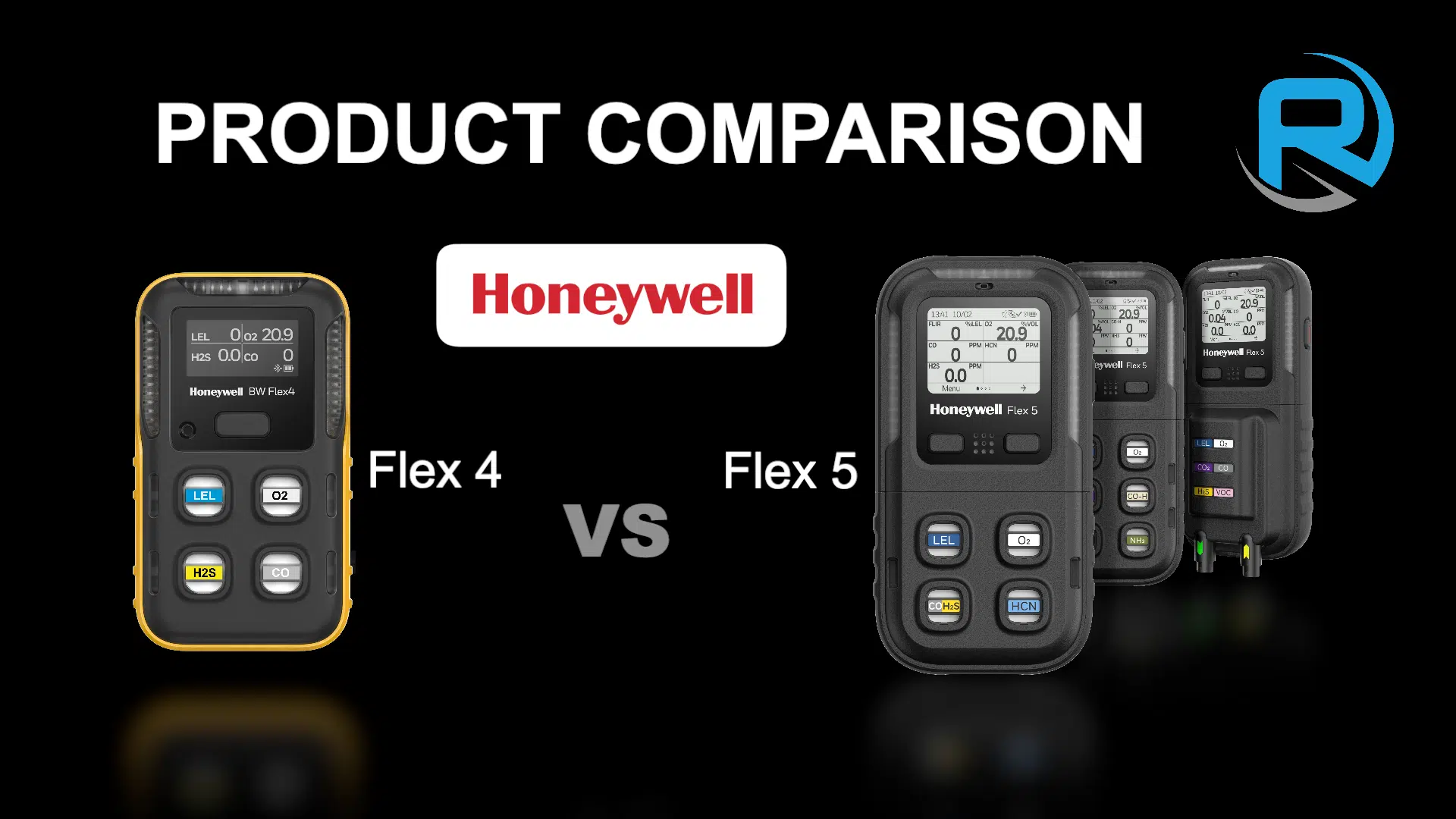
Honeywell BW Flex 4
With a choice of 12 different sensor types, the BW™ Flex protects you from multiple gas hazards, in a small, rugged, and easy to use device. BW™ Flex keeps specialists operating in confined spaces, or general workers on a plant, safe from gas hazards while making safety compliance for the business easy.
The BW Flex 4 by Honeywell is a compact, high-performance multi-gas detector designed for maximum safety and versatility in hazardous environments. It supports up to four gas sensors simultaneously and can be configured with a selection of 12 sensor types, including both standard and exotic gas options. Standard sensors include Hydrocarbon NDIR, Flammable Catalytic Bead (filtered and unfiltered), Oxygen (electrochemical and lead-free), Hydrogen Sulphide, Carbon Monoxide, and Sulfur Dioxide. For more specialised applications, exotic gas sensors are available for Carbon Dioxide (NDIR), Nitrogen Monoxide, Nitrogen Dioxide, Carbon Monoxide (low hydrogen response), Chlorine, and Hydrogen Cyanide.
For more information, click here: BW Flex 4 Multi-Gas Detector | Rockall safety
